Against Fascism!

10% of all direct sales are donated directly to organizations supporting human rights and fighting authoritarianism.
See the official announcement.

Dusky Electronics Home
Dusky Electronics


Dusky Electronics LLC
603 Holloway St
Durham, NC 27701
919-313-7347


https://duskyamp.com
cr@duskyamp.com

Proxima Cab
1x12 Guitar Speaker Cabinet

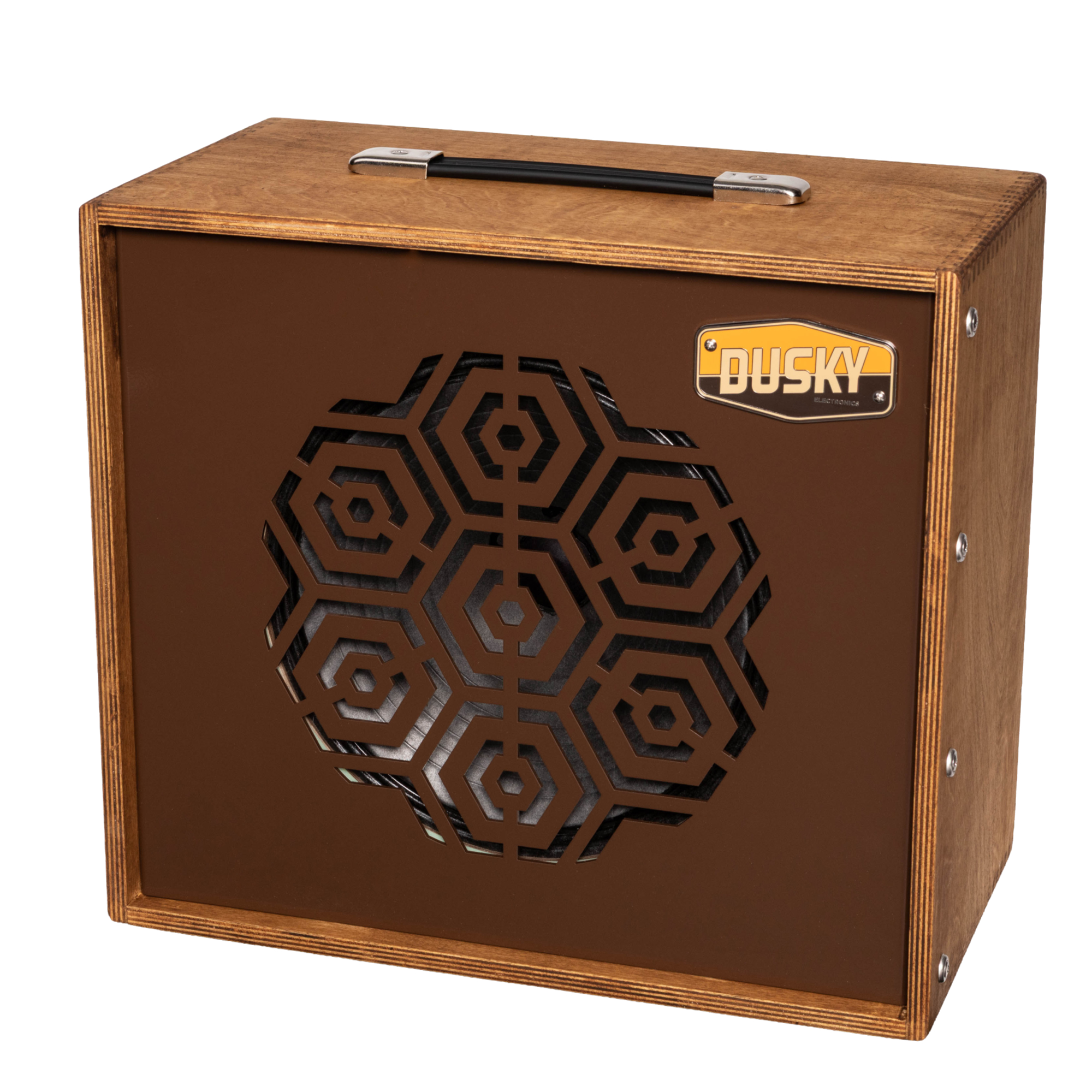
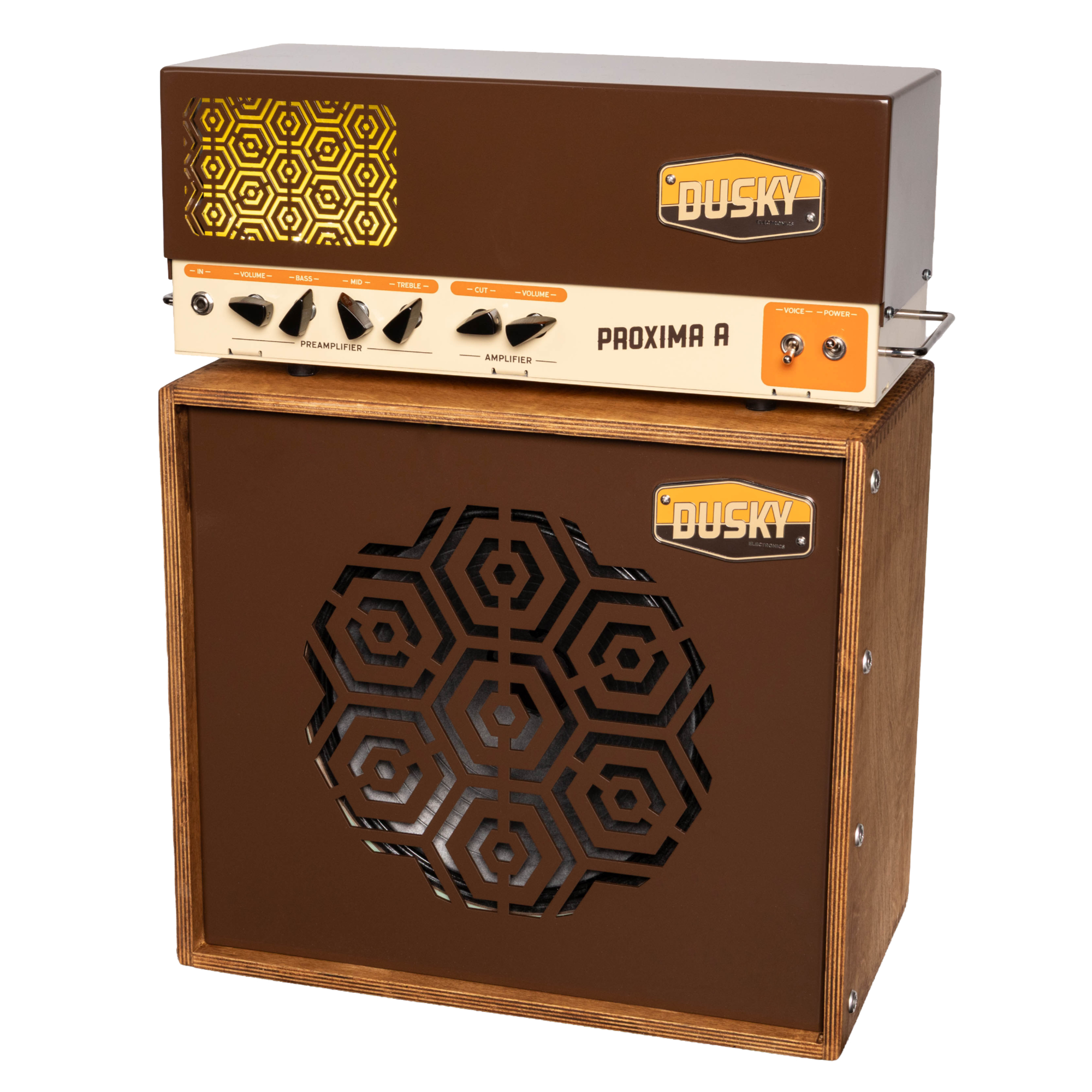
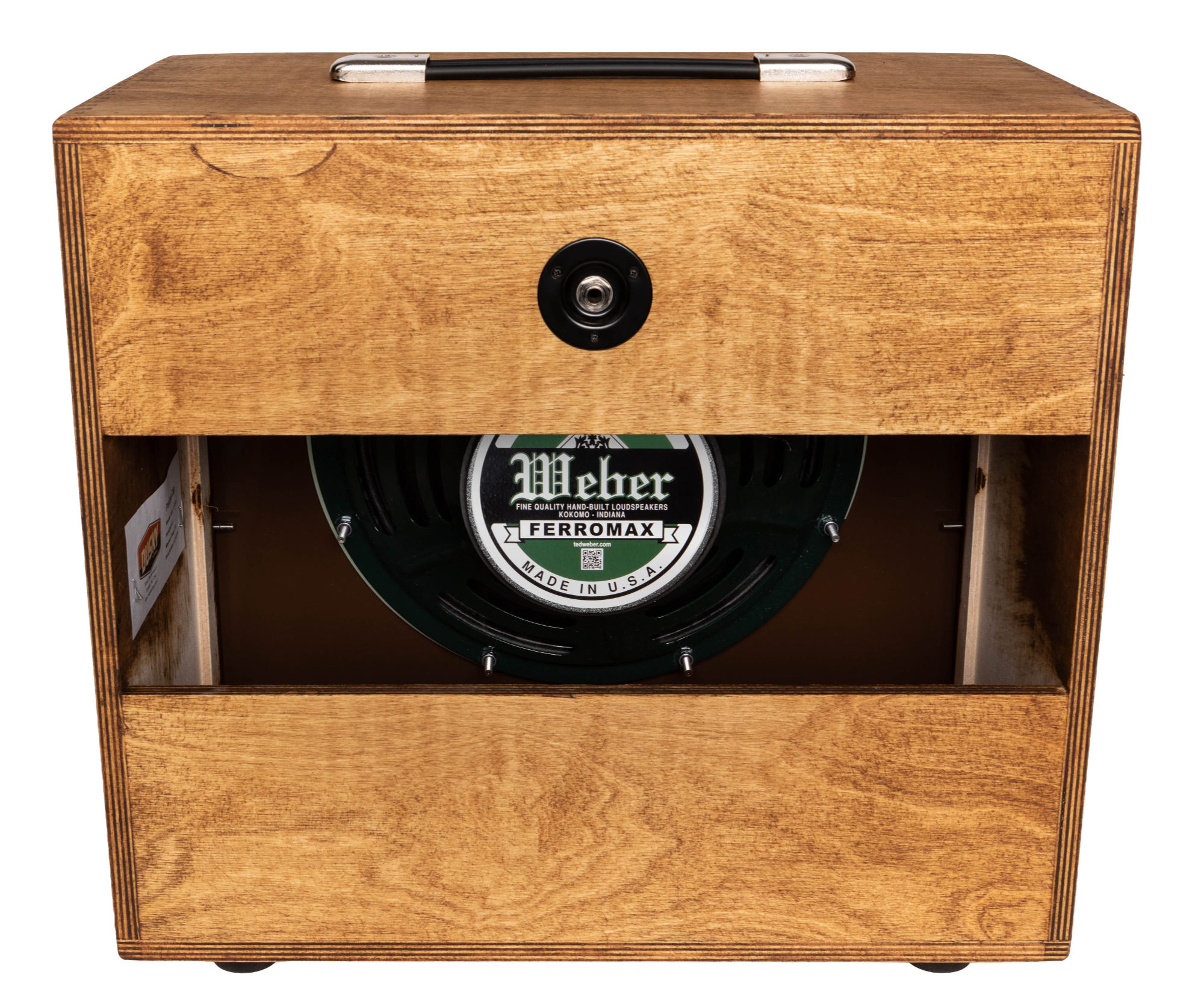
The Proxima A 112 cabinet is made from 1/2" baltic birch plywood, rustically finished in a plant based, hardwax oil finish, with a floating aluminum speaker baffle and choice of Weber 12" speaker. The thin wooden cabinet and floating aluminum baffle yield a cabinet that is lightweight, with a clear, lively sound.

The modern wood finish chemically bonds to the topmost fibers of the wood, retaining the natural feel of real hardwood. Only time will tell, but the expectation is that this will be a finish that ages beautifully as it collects signs of use on its way to and from practices and gigs.

Price:
Preorder deposit: $100.00
Deposit is non-refundable

Preorders open July 14, 2026

Quick Specs

Speaker Configuration 1x12"

Speaker American Voiced, Weber 12F150A

Impedance

Power Handling 25W maximum

Dimensions 20" wide, 19" high (+3/4" w/feet), 10.5" deep

Weight 35lbs

By default, the Proxima Cab 112 ships with a Weber 12F150A, 25 Watt, 8 ohm speaker. This speaker sounds excellent. I know choice can be a burden and if you prefer that I choose a speaker for you, this is the speaker I choose. You will be very happy with this speaker.

Some of you, however, relish the opportunity to customize the cabinet to your own taste by selecting your own speaker. I am a dealer for Weber, Eminence, and Warehouse Guitar Speakers and will be happy to load any 12" speaker from any of these manufacturers into your cabinet. If the speaker you want isn't available in the pull down, you can contact me and I can add it.

In the process of designing the cabinet, I've tried several speakers and have found a few very solid choices, that are presented below.

Currently Available Speakers

Great all around speaker. It is "American Voiced", which is a way of saying it is based on and sounds very much like speakers used in classic American made combo amplifiers of the 1960s. This is the black panel speaker sound. I have been using this speaker a lot and am pleased as punch with it.

Weber says:

"Replaces Chicago Jensen C12N and Oxford ceramic 12’s.

12″, 40oz ceramic magnet, 25 watts, 1-1/2″ voice coil, curved seam cone.

Brighter, smooth breakup, aggressive, punchy, loud, curved seam inverted rib cone similar to one version of the original Chicago Jensen P12N. More headroom than the AlNiCo version."

"British Voiced" here means that it is based on the famous “Greenback” speaker used with early Marshalls. Compared to an "American Voiced" speaker, it has much more of a midrange emphasis. If your idea of the perfect guitar sound involves Hendrix or British blues rock of the 1960s, then this may be the speaker for you. It is, of course, much more versatile than that. I have had a lot of fun rocking out with this one.

60s Greenback tone. Weber says:

"Original G12M-25 “Greenback” Tone. 12″, 30oz ceramic magnet, 25 watt, 1-3/4″ voice coil. British Kurt-Mueller ribbed cone.

Similar to the original G12M-25 Greenback, it is aggressive, yet has a smoother overdrive distortion characteristic. Maintains good detail and midrange complexity.

Paper cone – standard Kurt-Mueller British cone used in most of our British type speakers. The 75Hz cone is the more “classic Marshall guitar tone” if you will. 75Hz is the general name that has been given to this cone since the 60s, even though the resonant frequency is closer to 82Hz, which is low E on a standard tuned guitar. Standard low end with a midrange bump, and clear articulate high end.""

This is the same speaker as the 12F150A that is the "recommended" speaker, but with an AlNiCo magnet instead of a ferrite ceramic magnet. This makes it smoother and less punchy with more compression when driven hard. I absolutely adore this speaker clean–it has a richness and 3D quality that is very compelling. For harder driving sounds, though, I actually prefer the ceramic magnet speaker, as it just has more punch, so my choice here would be driven by application. This speaker is significantly more expensive than the ceramic version, but if you're contemplating a hand wired boutique amplifier, you may as well spend a little extra to get what you want, if what you want is an AlNiCo speaker.

Weber says:

"Replaces Chicago Jensen P12N and other late 50’s vintage AlNiCo 12’s.

12″, 40oz AlNiCo magnet, 25 watts, 1-1/2″ voice coil, curved seam cone.

Brighter, smooth breakup, aggressive, punchy, loud, curved seam inverted rib cone similar to one version of the original Chicago Jensen P12N. Compressed and fattened at higher volumes. This is the speaker that is used in the Fender Reissue ’57 Low Power Tweed Twin. Not recommended for use with harmonica."

The fun thing about designing for guitar amplification, as opposed to say, hi-fi, is that the goal is sound production, not reproduction. This gives the designer a free hand to try all kinds of fun things in the pursuit of producing a unique and pleasing timbre. For example, you can make an open back speaker cabinet with a floating aluminum baffle.

This design actually started with a prototype made entirely out of aluminum. Right out of the gate it sounded amazing. Although the lively aluminum cabinet participated in the sound production in a way that a more standard design would not, it still managed to be transparent, too, with amazing clarity.

The initial iteration was probably a little too lively, though—at high volume the cabinet would literally walk across the floor. I added some acoustic dampening material to the sides that calmed it down to a manageable level. But, it inspired me to try another iteration, this time pairing a more traditional wooden shell with an aluminum speaker baffle. This proved to be the sweet spot, with a sound like the best open backed speaker cabinets of the 1960s, with just a touch more clarity. The baffle is attached to the cabinet only along two sides, with the top and bottom edges left floating, just like in some older combo cabinet designs from back in the day, giving the baffle an extra degree of freedom to interact with the speaker in producing a sound.

Although the sonic impact will always be the most important, it doesn't hurt that the aluminum baffle looks gorgeous. For finishing the cabinet itself, I wanted to try something besides the ubiquitous vinyl covering used on most guitar amps and cabinets, and found a product, Rubio Monocoat which forms a molecular bond with the topmost fibers of the wood, for a very unfussy, beautiful, and durable finish. I'm really excited to see how these age, as I think the results will be gorgeous. I don't know about you, but I'm hauling these to practice, to shows, wherever. These are not designed to be museum pieces, they're designed to be used, and I certainly will be using the hell out of mine.

-- Chris Rossi, Owner, Dusky Electronics